
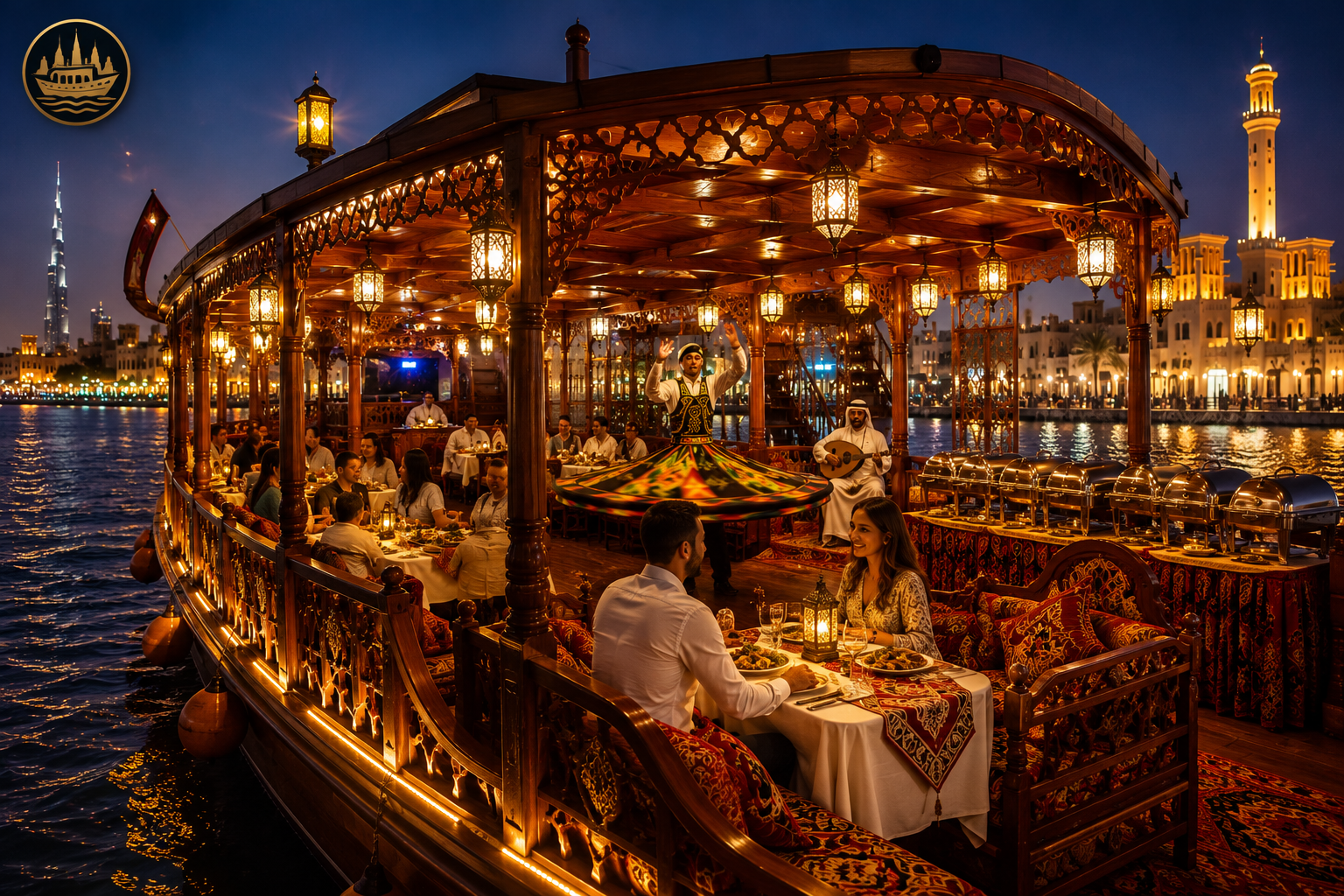
A Arabian Dhow Cruise offers a unique experience that combines UAE history, traditional wooden boat designs, waterfront dining and entertainment with modern sightseeing. A dhow tour is different from regular boat tours. It connects you with Dubai’s maritime past while providing luxury, Arabian hospitality and stunning views of the skyline.
What is an Arabian Dhow Cruise ?
A Arabian Dhow Cruise offers a unique dining and sightseeing experience aboard a traditional Arabian wooden vessel. The boats were used to fish, dive for pearls, trade and more. They have been a part of Gulf maritime cultures for many centuries.
Dhow Cruises are a great way for visitors to enjoy Dubai’s waters while:
- Traditional boat design
- Waterfront Sightseeing
- Buffet dining
- Live performances
- Arabian cultural experiences
This experience combines old-world charm and modern tourism.
What is the importance of a Dhow Cruise in UAE Heritage?
Dhows are closely linked to the history and development of the UAE.
The sea was at the heart of the local culture before Dubai became an international city. The traditional boats were used by communities to:
- Pearl Diving
- Fishing
- Coastal transportation
- Trade in international goods
Dubai Creek is of particular importance because it was a main trading route that connected Dubai to other areas.
Dhow Cruises allow visitors to enjoy this rich heritage while enjoying modern comfort.
What makes the traditional Dhow Boat special?
The Arabian Gulf is a maritime region where a wooden traditional boat represents its craftsmanship.
The traditional dhow includes:
- Wooden construction
- Classic Arabian design
- Handcrafted details
- The historic sailing style
The boats are designed for long trips and to be able to navigate Gulf waters.
The traditional look of the dhow has been modernized with facilities like:
- Enjoyable seats
- Restaurants
- Lighting
- Enjoy the entertainment spaces
The combination of the two makes this experience unique to other boat tours.
What is the history of Dubai’s maritime culture?
The early Dubai economy was dominated by dhows.
Pearl Diving History
The Gulf region is known for its pearl diving industry.
Dhows were used by divers to search for natural pearls in the Arabian Gulf. The local trading and communities were influenced by this tradition.
Fishing Traditions
Families living along the coast have relied on fishing dhows for many generations.
The boats are used to:
- Fishing trips daily
- Transporting Seafood
- Supporting local market
Trade across the Arabian Gulf
The dhows are also used to transport goods from one port to another.
Dubai was connected to:
- Gulf Countries
- Indian Ocean Regions
- Trading routes around the world
The maritime heritage of the UAE is still a very important aspect of culture.
What can you expect on an Arabian Dhow Cruise ?
The modern Arabian Dhow Experience is a memorable experience that includes many elements.
A Traditional Boat Journey
It is the journey that makes it so appealing.
Enjoy the following:
- Slow Sailing
- Tradition
- Enjoyable seats
- Enjoy the scenic views of the waterfront
It is a peaceful experience to be on a boat.
Arabian Hospitality
The warm hospitality is one of the most memorable aspects of a Dhow Cruise.
Visitor can enjoy:
- Service amiable
- Welcome to the Traditional Tradition
- Comfortable dining
- Cultural Atmosphere
The UAE is known for its hospitality.
Waterfront Dining Experience
Most dhows offer a package that includes a meal.
Enjoy the following:
- Buffet dinner
- Arabic Cuisine
- International Dishes
- Desserts
- Soft drinks
A unique experience is created when you dine on the water and view Dubai’s skyline.
Cultural Entertainment
Dhow Cruises are also popular for their entertainment.
Some of the most common performances are:
Tanoura Dance
Tanoura is a performance that’s known for its colorful costumes and spinning motions.
This is a common cultural component of Dubai Cruise experiences.
Traditional Music
Some cruises feature:
- Arabic music
- Live performances
- Culture shows
The performances are authentic and add to the experience.
Why do tourists love Arabian Dhow Cruises ?
The Arabian Dhow Cruise Dubai is popular for its ability to offer multiple experiences within one activity.
Enjoy the following:
Cultural Discovery
The dhow is a great way to see the sights of:
- UAE Traditions
- History of the sea
- Arabian culture
Beautiful Sightseeing
Enjoy the views from:
- Dubai skyline
- Attractions on the Waterfront
- Historical areas
- Modern architecture
Relaxing Evening Experience
It is a great place for those who are looking to relax after exploring the cities.
The Best Arabian Dhow Cruise for Diverse Travelers
Cruise styles can be different for every traveler.
| Traveler Type | The Best Experience |
| Couples | Enjoy a luxury dinner cruise and enjoy the skyline view |
| Families | Comfortable sightseeing cruise |
| Cultural Lovers | Dubai Creek Heritage Cruise |
| Photographers | Marina or Canal Evening Cruise |
| Luxurious Travellers | Experience the Premium Dhow |
Arabian Dhow Cruises Locations in Dubai
Dubai has a variety of dhow cruise locations.
Dubai Creek
The Best of:
- Heritage Lovers
- Tradition
- Explore Old Dubai
Visitor can view:
- Deira Waterfront
- Markets
- Historical areas
Dubai Marina
The Best of:
- Luxurious Travelers
- Skyline Photography
- Views of modern cities
Highlights of the show include:
- Marina skyline
- Luxury yachts
- Waterfront Restaurants
Dubai Water Canal
The Best of:
- Modern architecture lovers
- Enjoy a scenic evening cruise
- Photography enthusiasts
Enjoy the following:
- Bridges over canals
- Front view
- Dubai’s contemporary scenery
Tips for Booking a Dhow Cruise
Select the right location
Choose based on what you are interested in:
- Creek for heritage
- Marina for Luxury
- Canals for Modern Views
Booking an evening cruise
Evening cruises can be recommended for:
- The weather is cooling
- The city lights can create an amazing atmosphere
- Photographic opportunities are improving
Check included services
Confirm your booking before you book
- Dinner availability
- Shows and entertainment
- Cruise duration
- Location of the boarding location
Arrive early
Arrive at the departure point prior to time.
- Smooth check-in
- Seating for Better Comfort
- Start with a relaxed attitude
Avoid these Common Mistakes
Do not make these common mistakes
- Book without Checking Reviews
- Only selecting the lowest prices
- Cruise routes are often overlooked
- Checking inclusions
You should choose a dhow that meets your needs and expectations.
FAQ
Why is an Arabian Dhow Cruise unique?
A dhow voyage in the Arabian Sea is a unique experience that combines UAE culture, traditional boats, dining and entertainment with Dubai sightseeing.
Are Arabian Dhow Cruises Worth It?
Yes. This is one of Dubai’s most popular experiences for tourists. It offers cultural exploration, relaxing entertainment and waterfront views.
Which food will you find on a dhow voyage in Arabia?
Many cruises include a buffet with international cuisine, Arabic dishes, deserts and drinks.
Are Arabian Dhow Cruises suitable for Families?
Yes. The dhows provide comfortable seating and sightseeing for the whole family.
What is the best: a dhow boat cruise on Dubai Creek, or a dhow at Marina?
Dubai Creek offers more heritage and culture, while Marina has a better view of the skyline.
What entertainment is included in dhow cruises?
Many cruises offer live entertainment, such as Tanoura dancing and traditional performances.
The Final Thoughts
A Arabian Dhow Cruise offers more than just a boat trip. This is an adventure through UAE history, maritime heritage and the modern attractions of Dubai.
The experience is a mix of the old and the new, combining traditional wooden boats with Arabian hospitality and buffet dining.
A dhow trip in the Arabian Gulf is a great way to see the city. Whether it’s Dubai Water Canal, Dubai Marina, or Dubai Creek, you can enjoy the culture and luxury of the area.
A dhow voyage is the perfect way to experience Dubai’s heritage and hospitality while enjoying breathtaking views of its waterfront.